Key Takeaways
- Cleanroom manufacturing demands extremely low particulate and residue contamination levels.
- Electronics and medical device manufacturers often need validated cleaning processes to meet regulatory or customer standards.
- Ultrasonic cleaning removes contaminants from microscopic features that manual cleaning often misses.
- Frequency, chemistry, rinse quality, and drying all affect whether cleanliness targets are achieved.
- Proper system design helps support compliance with standards such as FDA, ISO 13485, IPC, and internal cleanliness specs.
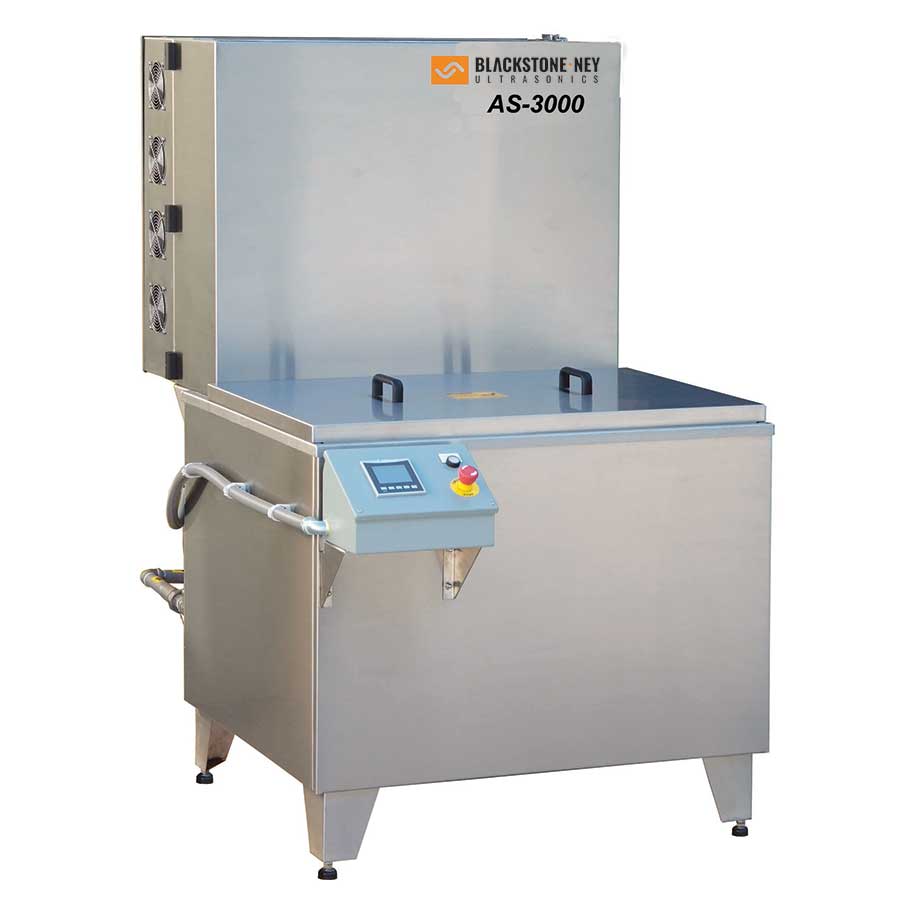
- Blackstone-NEY ultrasonic cleaning stations can be configured to support precision cleaning in controlled manufacturing environments.
In electronics and medical device manufacturing, cleanliness is not simply a quality preference. It is often a strict requirement tied to product performance, patient safety, and regulatory compliance.
A small amount of contamination can cause major problems. On a PCB assembly, flux residue or microscopic particulate may contribute to corrosion, leakage current, or intermittent failures. On a medical device, oils, machining residue, or bioburden can compromise sterilization or create regulatory concerns.
That is why many manufacturers rely on validated cleaning processes designed specifically for cleanroom and precision manufacturing environments. Ultrasonic cleaning has become one of the most effective methods for achieving these demanding cleanliness standards.
Why Cleanroom Cleaning Standards Are So Demanding
Cleanroom production environments are designed to minimize contamination, but manufacturing processes still introduce unwanted materials.
Common contaminants include:
- Machining oils
- Coolants
- Flux residues
- Fingerprints
- Dust and airborne particulate
- Metal fines and burrs
- Polishing compounds
- Biological contamination
In regulated industries, these contaminants can create compliance risks.
Examples of common standards include:
- U.S. Food and Drug Administration requirements for medical device manufacturing
- International Organization for Standardization ISO 13485 for medical devices
- IPC Standards for electronics assemblies
- AS9100 for aerospace manufacturing
Many OEMs and contract manufacturers also maintain internal cleanliness specifications based on particle count, residue limits, or surface energy testing. The challenge is not just cleaning parts. The challenge is cleaning them consistently and documenting that the process is repeatable.
Why Manual Cleaning Often Fails Precision Applications
Manual cleaning methods such as wiping, spraying, or brushing can work for simple surfaces, but they struggle with increasingly complex part geometries.
This is especially true for:
- Fine-pitch electronic assemblies
- Catheters and tubing
- Small machined medical components
- Implantable device parts
- Microfluidic components
- Precision optics and sensors
These components often contain:
- Blind holes
- Internal channels
- Threads
- Crevices
- Microscopic surface features
Contaminants trapped in these areas can remain even after aggressive manual cleaning. This is where ultrasonic energy offers a major advantage.
Ultrasonics Improve the Cleaning Performance of Cleanrooms
Ultrasonic cleaning uses high-frequency sound waves transmitted through a liquid bath. These sound waves create microscopic cavitation bubbles. When the bubbles collapse, they generate highly localized energy that dislodges contaminants from part surfaces. This process is especially effective because it reaches areas traditional cleaning cannot.
Ultrasonic cleaning can remove contamination from:
- Tiny crevices
- Complex geometries
- Internal passages
- Recessed surfaces
- Delicate assemblies
For cleanroom applications, this matters because contamination often hides where visual inspection cannot detect it.
Benefits of ultrasonic cleaning for regulated manufacturing include:
- Improved particulate removal
- Better residue removal
- Reduced manual labor
- Greater process repeatability
- Lower risk of part damage compared with aggressive mechanical cleaning
- Easier validation of cleaning parameters
Choosing the Right Ultrasonic Frequency for Sensitive Parts
Not all ultrasonic cleaning systems perform the same. Frequency selection has a major impact on cleaning effectiveness and part safety.
Lower frequencies such as 25–40 kHz typically produce more aggressive cavitation and are useful for heavier contamination.
Higher frequencies such as 68–170 kHz generate smaller cavitation bubbles, making them ideal for delicate components.
For example:
40 kHz systems are often used for:
- General industrial cleaning
- Heavy oils and residue
- Robust machined components
80 kHz and above are often used for:
- Electronics
- Semiconductor-related parts
- Sensitive medical devices
- Precision optics
Higher-frequency cleaning can reduce the risk of surface erosion or damage to fragile assemblies while still achieving excellent contaminant removal.
The correct frequency depends on:
- Part geometry
- Material
- Surface finish
- Type of contamination
- Required cleanliness level
Cleanroom Ultrasonic Cleaning Requires More Than the Tank
A common misconception is that the ultrasonic tank alone determines cleaning results. In reality, achieving cleanroom standards requires a complete process.
Critical process elements include:
Cleaning Chemistry
The cleaning solution must be compatible with both the contamination and the substrate.
Common chemistries include:
- Aqueous detergents
- DI water-based solutions
- IPA-compatible cleaning processes
- Specialty low-residue formulations
Rinse Quality
Poor rinse quality can redeposit contaminants.
High-purity rinsing may involve:
- Deionized water
- Multi-stage rinsing
- Overflow rinse systems
- Resistivity monitoring
Drying
Even perfectly cleaned parts can fail if drying is inadequate.
Common drying methods include:
- Heated air drying
- Vacuum drying
- Nitrogen blow-off
- Cleanroom-compatible drying stations
Process Validation
Validation ensures the process consistently achieves cleanliness targets.
Common validation methods include:
- Particle count testing
- Gravimetric residue analysis
- Conductivity testing
- Surface inspection
- Swab testing
For many manufacturers, this documentation is just as important as cleaning performance.
Ultrasonic cleaning stations are widely used across precision industries.
Electronics Applications
- PCB cleaning
- Stencil cleaning
- Connector cleaning
- Semiconductor component cleaning
- Sensor cleaning
- Solder residue removal
Manufacturers use ultrasonic systems to remove:
- Flux
- Solder paste
- Ionic contamination
- Fine particulate
Medical Device Applications
- Surgical instruments
- Orthopedic implants
- Cannulas
- Catheters
- Machined titanium components
- Diagnostic device components
In medical manufacturing, repeatable cleaning supports both sterilization readiness and regulatory compliance.
How Blackstone-NEY Supports Cleanroom Ultrasonic Cleaning
Blackstone-NEY works with manufacturers that cannot afford uncertainty in their cleaning process. Our ultrasonic cleaning stations are engineered for precision applications where cleanliness validation matters.
Depending on the application, we can provide systems featuring:
- Single-stage or multi-stage cleaning
- Precision ultrasonic frequency selection
- Immersible ultrasonic transducers for retrofit applications
- Heated cleaning and rinse tanks
- DI water rinse integration
- Custom automation and controls
- Process consultation and application testing
Whether you are cleaning electronic assemblies, medical device components, or other precision parts, the right ultrasonic system should do more than clean. It should support a repeatable, validated manufacturing process.
If your team is evaluating a new ultrasonic cleaning process or upgrading an existing system, contact the Blackstone-NEY team to discuss your application and cleanliness requirements.