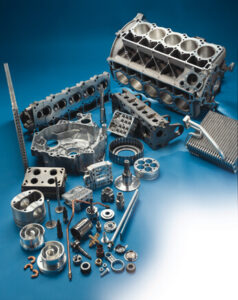
Nearly anyone who has been involved in the procurement of an ultrasonic cleaning system has come head to head with watts of ultrasonic power issues. Variations of an order of magnitude or more are common in ultrasonic watts ratings from competitors selling equipment of otherwise similar size and capacity. Despite the discrepancies, I don’t believe anyone … Continued
I sometimes reflect the purpose of John’s Corner. It’s really pretty simple – to help those who are interested in industrial cleaning to understand and make the best use of the existing industrial cleaning technology – but maybe it’s more. As most of you may know (it is no secret), I am a former employee … Continued
It will come as no surprise to anyone who is involved with industrial parts cleaning that rinsing is an expensive but important part of the process. Although it may not reduce your wardrobe to “rags,” proper rinsing can put a sizeable dent in the cleaning budget. Let’s talk a minute about how to reduce the cost of rinsing. The … Continued
“Millipore” testing is a popular way of quantifying part cleanliness today. What is generally not known, however, is that it is far from an absolute standard and, in fact, can be very misleading even if “properly” applied. Part of this may be due to the genesis and heritage of Millipore testing. At its inception, Millipore … Continued

Some time ago I wrote a paper entitled “What is a Watt.” Although this paper seems lost in history (I can not find a copy of it), I can remember the point that I was trying to make when I wrote it. In essence, it made the case that a watt is only an instantaneous … Continued
Inductors and capacitors both provide short term storage of electrical energy but in different ways and with different goals. A capacitor physically stores electrons and acts as a source of voltage. An inductor stores electrical current in a magnetic field and acts as a source of current. Although not present in all inductors, a core … Continued
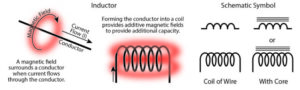
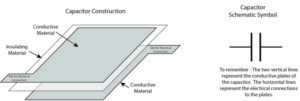
Both capacitors and inductors are “reactive” components. Unlike resistors, capacitors and inductors store electricity on a short term basis but in different ways. For me, the capacitor is a little easier to understand so let’s start with it. For all practical purposes, capacitors consist of two pieces of conductive material (think aluminum foil) separated by … Continued
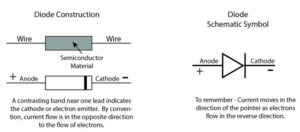
The purpose of a diode is to allow the flow of electrical current in only one direction. The ability to control current flow is very useful in electronics applications. Diodes have been around in one form or another for a long time. In the days of vacuum tubes, a “diode” was a tube with a … Continued
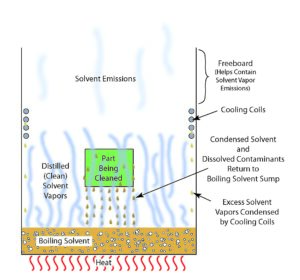
Most cleaning today is based on aqueous (water based) technology. Wash, rinse and dry cleaning has become the norm. But, for those of you who are new to the cleaning industry and don’t know, Chlorinated and Fluorinated solvents were the cleaning “benchmark” for many years. Virtually every manufacturing facility cleaned something using a vapor degreaser with … Continued
The level of scrutiny given to manufactured parts has never been higher than it is today. Between the demands of lean manufacturing objectives and strict regulatory requirements, the parts you deliver must be absolutely free of defects, including contamination and debris.Considering the importance of parts quality, it is a good idea for manufacturers who have not invested in