The term “near field” is not new to ultrasonic cleaning. In general, it refers to cleaning parts in near proximity to the ultrasound source. It is well known that increasing ultrasonic power density can produce improved cleaning results in many cases. Increasing power density can be accomplished by reducing the size of the cleaning vessel to … Continued
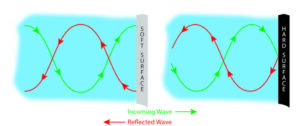
If you are squeamish about electricity or don’t care about electricity you may want to skip this one. But we’re going to talk about some things at are pretty neat, central to the world of electronics and downright cool if you’d like to stick around. Recent blogs have talked about resistors, capacitors and inductors which, … Continued
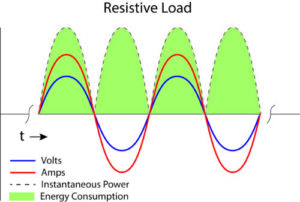
The blog Ultrasonics – Ultrasonic Generators – Power Control discussed several ways in which the power delivery of ultrasonic generators can be varied. One of the ways is by modulating the amplitude while another is through the use of time proportioning or duty cycle modulation. There are other ways as well, but these are the … Continued

A reader has asked for a description of how “near field” ultrasonics works. First of all, the term “near field” is one that is not well defined in the ultrasonic cleaning world. For the purpose of this discussion regarding ultrasonic cleaning, “near field” means putting the ultrasonic source close to the work piece. It may … Continued

The purpose of fuses is relatively easy to grasp. A fuse interrupts a circuit (turns off) if the current flow (amps) is more than expected or more than the circuit components including wires etc. can safely handle. High current is usually the result of a short circuit, the failure of a device connected to the … Continued
My recent blog, Are Ultrasonic Power Ratings Real?, prompted a response from my friend and colleague William Puskas. Some of you may know Bill as the “Father of Sweep” as he was the first to implement frequency sweeping technology in ultrasonic cleaning equipment decades ago. He is also the author of a significant number of … Continued
Using a vacuum to assist or effect total drying is not a new concept. A reduction of air pressure lowers the boiling point of water and other liquids and thereby speeds their rate of evaporation. Although not practical in many applications for reasons I will discuss below, vacuum drying remains a viable alternative in some specialized applications. … Continued
Watts of ultrasonic generator output power is one metric often used in the comparison of ultrasonic cleaning systems. In a previous blog, I discussed the potential foibles of using watts of consumption as a measure of comparison as there is no standard for measuring the output of an ultrasonic generator. But there are also other … Continued

More is better in some cases but when it comes to chemistry in industrial cleaning, using too much is costly and could indicate process problems as well. Cost – First, there is the obvious cost of using more chemistry. Most aqueous cleaning chemistries range in price from $15 to $40 per gallon but may exceed … Continued
More is better in some cases but when it comes to chemistry in industrial cleaning, using too much is costly and could indicate process problems as well. Cost – First, there is the obvious cost of using more chemistry. Most aqueous cleaning chemistries range in price from $15 to $40 per gallon but may exceed … Continued