Ultrasonic Cleaning FAQs
Ultrasonic Cleaning Systems & Equipment Options
Blackstone-NEY mobile ultrasonic parts washers deliver the same precision cleaning performance as bench-top models, but in a self-contained, transportable package. Mobile systems integrate ultrasonic tanks, filtration, heating, and rinse/dry stages on a movable frame, making them ideal for maintenance teams or field operations that require flexibility. Unlike fixed bench-tops, they can be wheeled directly to production lines or workstations, reducing part handling and downtime.
Cabinet ultrasonic washers combine cleaning, rinsing, and drying functions within a single enclosed chamber, minimizing floor space and operator handling. They’re ideal for high-throughput environments that require consistent cleaning cycles. Tank-to-tank systems, by contrast, offer more flexibility for complex, multi-step processes or varying chemistries. While both achieve exceptional cleanliness, cabinet systems typically reduce cycle time, whereas tank-to-tank configurations maximize process customization and particle control.
Routine maintenance ensures consistent performance and long equipment life. For Blackstone-NEY benchtop systems, recommended maintenance includes:
- Checking and replacing cleaning solution as needed
- Inspecting transducers and tanks for wear or scale buildup
- Cleaning filters and drains regularly
- Verifying ultrasonic power and uniformity
- Ensuring heaters, timers, and controls function properly
With proper care, Blackstone-NEY benchtop cleaners deliver years of reliable precision cleaning with minimal downtime.
Click here to fill out a contact form and let us determine what is needed to meet your expectations.
Different cleaning requirements require different ultrasonic frequencies. Lower ultrasonic frequency means larger cavitation bubbles and more intense cavitation implosions. At higher frequencies, the cavitation bubbles are smaller, and although the cavitation implosions are individually less intense there are more of them. Frequencies below 80 kHz are commonly used for industrial cleaning applications where contaminants are relatively heavy and the parts being cleaned are robust. Frequencies above 80 kHz are more frequently used to clean more delicate parts that require a higher degree of cleanliness. Multiple frequency ultrasonics is indicated when a wide range of particle sizes and types need to be removed for the highest degree of cleanliness. Thus, in an optimized single process, one would employ low frequency ultrasonics to remove large particles and / or gross contamination, and high frequency ultrasonics to remove submicron particles. This constitutes the ideal cleaning process, in which a part can be exposed to relatively low frequency ultrasound, i.e. 40 kHz or 72 kHz, for short amounts of time and then to high frequency ultrasound, i.e. 104 kHz or 170 kHz for long times. Such a process would avoid the damage often associated with low frequency ultrasonics but run the gamut, from large to submicron sized particles, with excellent particle removal efficiency. The most recent technological advances in ultrasonic systems allow such a processing scheme to be realized. Refer to the papers entitled “Designer Waveforms” and “Ideal Parameters” in the Technical Information section of this website for additional information.
The right amount of ultrasonic energy (usually expressed in watts per gallon) depends on the size of the cleaning bath and the difficulty of the cleaning requirement. Tanks in the one to two gallon size range often provide up to 200 watts per gallon of ultrasonic power. Achieving the same cleaning effect in larger tanks requires less energy density. Excellent cleaning has been demonstrated in tanks having 2,000 gallons capacity with only 5 to 7 watts per gallon. The more difficult the application, the greater energy density is required for effective cleaning. Too much ultrasonic power may result in cavitation erosion occurring on delicate or highly polished parts that are near the transducer radiating surface. Aluminum, copper, brass and other soft metals are especially susceptible to cavitation erosion.
Ultrasonic cleaning equipment utilizes high energy sound waves at frequencies above those audible to humans to enhance the chemical and mechanical cleaning effects of liquids. The ultrasonic energy, although high in power, has no measurable impact on human auditory senses – in fact, there are no established time weighted average exposure limits for frequencies above 20kHz (20,000 cycles per second) . The frequencies of concern are the audible sub-harmonics of the ultrasonic primary frequency. These are produced due to sympathetic resonance of various components of the ultrasonic equipment which may include the cleaning tank, the enclosure panels, lids and other features. Pumps, blowers, and other ancillary equipment also contribute to the overall noise produced by the unit. In that regard, ultrasonic cleaning equipment is no different than a machine tool or any other piece of equipment found in the industrial environment. Ultrasound of the intensity that can be transmitted through the air has no known effect on body tissue. Ultrasound, in fact, is commonly used for imaging of the human body.
Tank materials play a large part in the absorption and dispersion of ultrasonics. As mentioned previously soft materials such as plastics will absorb the ultrasonics. They can however be used if the ultrasonic power is boosted to overcome the absorption. Tanks shape plays less of a part in design but needs to be considered. Ultrasonic power does reflect from not only tank walls but also from the water surface.
Ultrasonic Cleaning Performance & Process Fundamentals
View the diagram How Big is a Micron?
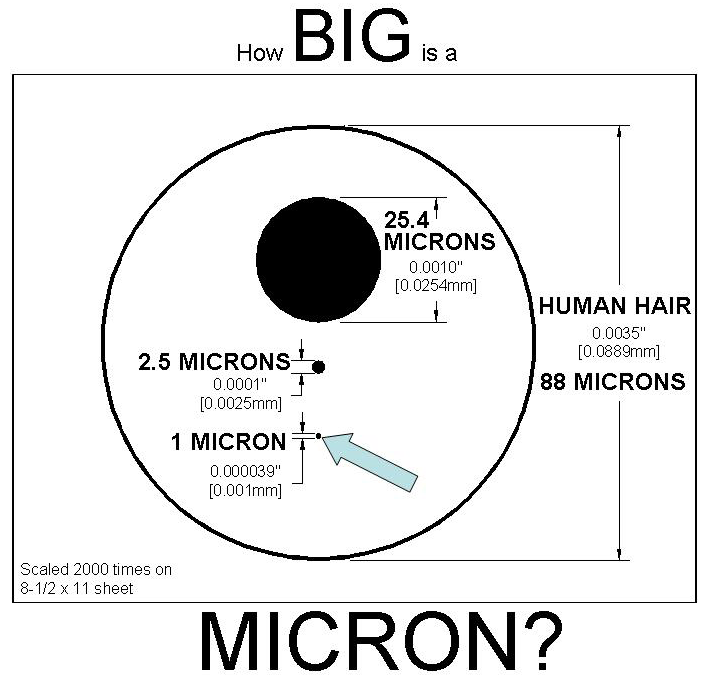
Blackstone-NEY console ultrasonic systems achieve sub-micron particle removal through high-frequency sound waves (typically 40 kHz or higher) that generate microscopic cavitation bubbles in the cleaning solution. These imploding bubbles lift and dislodge particles smaller than one micron, even from complex geometries and blind holes. Advanced filtration, agitation, and multi-stage rinse cycles ensure contaminants remain suspended and removed rather than redeposited on cleaned parts.
For heavy soils like cutting oils and grease, lower ultrasonic frequencies (25–40 kHz) combined with moderate-to-high power densities provide the most effective cavitation and agitation. Blackstone-NEY console systems allow users to adjust both parameters for specific contamination types. For finer particulate removal or delicate materials, higher frequencies (68–80 kHz) can be selected. The right balance of frequency, chemistry, and temperature ensures optimal cleaning without damaging sensitive surfaces.
Cleaning chemical selection is extremely important to the overall success of the ultrasonic or megasonic cleaning process. The selected chemical must be compatible with the base metal being cleaned and have the capability to remove the soils that are present. It must also cavitate well. Most cleaning chemicals can be used satisfactorily with ultrasonics or megasonics. Some are formulated especially for use with ultrasonics and megasonics. However, the non-foaming formulations normally used in spray washing applications should be avoided. Highly wetted formulations are preferred. Many of the new petroleum cleaners, as well as petroleum- and terpene-based semi-aqueous cleaners, are compatible with ultrasonics and megasonics. Use of these formulations may require some special equipment considerations, such as increased ultrasonic or megasonic power, to be effective.
Degassing is the process of removing small suspended gas bubbles and dissolved gas from a liquid prior to using it as a vehicle for ultrasonic cleaning. Dissolved gas, if not removed, migrates into cavitation bubbles during their formation and prevents them from imploding violently to promote the cleaning effect and gas bubbles absorb ultrasonic energy reducing the sound intensity in the tank. The gas acts to cushion the imploding bubble much like an air bag in a car. Liquids should be degassed by raising the temperature, adding the cleaning chemistry and operating the ultrasonic energy for a period of time ranging from 10 to 30 minutes (depending on the size of the tank and the nature and concentration of the chemicals being used) minimum prior to use. Small bubbles will not be seen rising to the liquid surface during ultrasonic operation in a completely degassed liquid.
Temperature was mentioned earlier as being important to achieving maximum cavitation. The effectiveness of the cleaning chemical is also related to temperature. Although the cavitation effect is maximized in pure water at a temperature of approximately 160°F, optimum cleaning is often seen at higher or lower temperatures because of the effect that temperature has on the cleaning chemical. As a general rule, each chemical will perform best at its recommended process temperature, regardless of the temperature effect on the ultrasonics or megasonics. For example, although the maximum ultrasonic effect is achieved at 160°F, most highly caustic cleaners are used at a temperature of 180°F to 190°F because the chemical effect is greatly enhanced by the added temperature. Other cleaners may be found to break down and lose their effectiveness if used at temperatures in excess of as low as 140°F. The best practice is to use a chemical at its maximum recommended temperature not exceeding 190°F.
Optimal spacing to minimize part damage would be to keep the basket two inches away from the radiating surface and one inch from the air to water interface.
As long as the liquid in the bath can find its way into blind holes then the ultrasonics can and do work in blind holes and on top of the parts.
In order to answer this question correctly, it is necessary to differentiate between agitation and turbulation. In cleaning, agitation is defined as moving the parts being cleaned in an up and down or side to side motion while immersed in the cleaning bath. Turbulation refers to the relative movement of liquid in an otherwise static liquid bath as created by underwater sprays (eductors), filtration returns, and other actions. Both agitation and turbulation may be beneficial in immersion cleaning without the use of ultrasonics. When using ultrasonics, agitation usually enhances cleaning by sweeping away contaminants initially released by the action of ultrasonic cavitation and implosion. Turbulation, on the other hand, is usually detrimental to ultrasonic cleaning. A shearing action within the liquid disturbs the ultrasonic field thereby reducing the ultrasonic effect. In summary, agitation is generally beneficial when using ultrasonics but turbulation is not and may, in fact, reduce the effectiveness of ultrasonic cleaning. For an expanded discussion of this topic, refer to our technical blog.
Absolutely. While detergents aid in the formation of the bubble, cavitation is still very effective in plain water or demineralized water. Where there is cavitation there can still be cleaning.
If the ultrasonic power is properly specified for the flow of water and turbulation then degassing is not required.
Rinsing is as important as cleaning in many applications and should be given the same attention as cleaning. Rinsing removes residues of the cleaning chemistry and the contaminants it has loosened to leave a part completely free of residue. Parts properly rinsed in de-ionized water or water processed by reverse osmosis will dry completely without water spots. Rinsing can be improved by increasing water flow or by adding more cascading rinse tanks. See the paper entitled “Ten Minutes to Better Rinsing” in the technical information section of this website for additional information. Further enhancement of rinsing can be realized by adding ultrasonics to the rinse tank(s).
There is no universally accepted standard for evaluating the performance of an ultrasonic cleaner. Several methods are available which will detect day to day variations in relative ultrasonic intensity. The classic “aluminum foil test,” removing graphite from a ceramic surface and various hydrophone-type devices are the most commonly used for this purpose. When using any of these, it is important to duplicate conditions as closely as possible to assure that any change indicates a true variation in the ultrasonic performance and is not related to a change in temperature, soil loading, chemical concentration or any of several other variables. For critical applications and where the expertise is available, an alternative approach is to evaluate the transducer condition by measuring its capacitance and resistance and to monitor the generator power by measuring its input current, input power or output power. If the transducer characteristics are within specifications and if the generator is drawing the correct power from the AC lines or delivering the correct power to the transducers, the probability that the ultrasonic cleaner is working right is very high.
The simple answer is that something has changed. The change, however, is not always found at the cleaning station. Once temperature, chemical concentration and all other cleaning parameters have been ruled out, the search should proceed back through the manufacturing steps. Common sources of problems include a change in lubricants, manufacturing processes and even raw materials. Cleaning problems may also be caused by clogged filters, misdirected coolant nozzles and improper machining or finishing practices. A change that is considered inconsequential by manufacturing may result in a huge difference in part cleanability.
Applications, Materials & Regulatory Considerations
In industries like electronics and medical device manufacturing, where contamination can compromise performance or sterility, console ultrasonic cleaning provides unmatched consistency and precision. Blackstone-NEY consoles offer:
- Uniform cavitation for delicate or complex components
- Controlled frequency and power to prevent damage to sensitive surfaces
- Multi-stage rinsing and drying for total residue elimination
- Validation-ready controls for process documentation and repeatability
These features make them ideal for FDA- and ISO-regulated environments requiring reliable and verifiable cleanliness.
When specifying a mobile precision cleaning system for aerospace or defense applications, engineers should evaluate:
- Cleanliness standards: MIL-STD and AS9100 compliance for residue and particulate removal
- Material compatibility: Assurance that cleaning chemistries won’t affect aluminum, titanium, or composite materials
- Mobility and footprint: Ability to move between work cells or testing areas
- Control validation: Data logging, recipe control, and process traceability for documentation
Blackstone-NEY designs mobile precision systems to meet stringent aerospace cleanliness and traceability requirements while remaining portable and efficient.
Cleanliness validation for optical or precision components typically involves both non-volatile residue (NVR) and particle count testing. Blackstone-NEY systems support these validation processes by providing repeatable ultrasonic energy, controlled temperature, and filtration levels suitable for ISO 16232 and IEST-STD-CC1246 standards. Verification is often performed using gravimetric analysis, particle counters, or surface inspection under magnification to confirm that residue and particulate levels meet specification limits.
Certain Blackstone-NEY portable systems can be configured for safe operation with flammable solvents such as isopropyl alcohol (IPA), provided explosion-proof construction and proper ventilation are specified. Systems designed for solvent compatibility include intrinsically safe electrical components, sealed vapor containment, and solvent recovery options. Users must always follow NFPA and OSHA guidelines for Class I Division 1 or 2 areas to ensure compliance and operator safety.
Ultrasonic cleaning systems must comply with EPA, local, and state environmental regulations related to waste disposal, wastewater discharge, and chemical management. Blackstone-NEY designs equipment to support compliance through closed-loop rinsing, filtration, oil separation, and waste minimization options. Aqueous-based chemistries replace many traditional solvents, reducing VOC emissions and hazardous waste. Facilities can further simplify compliance by integrating on-site recycling or waste treatment modules into their cleaning line.
Flammable solvents MUST not be used in any cleaning system not specifically rated for use with them. In the Blackstone-NEY Ultrasonics line, only the model HT-1306 IPA (HT-1306 IPA) is rated for use with flammable solvents and then only in a controlled environment. Other solvents should be used only with extreme caution and ONLY in equipment specifically intended to be used with them. Most solvents require special equipment considerations to cavitate effectively because of their physical characteristics. The use of small amounts of solvent in glass beakers suspended in a water bath in an ultrasonic cleaner is the preferred method of handling any occasional need for small volume solvent cleaning.
Concerns about damage to electronic components as a result of ultrasonic cleaning can be traced back to the 1950’s when a single incidence of damage to early generation semiconductors was described in a report issued by the air force. Today’s semiconductor devices are designed to withstand the rigors of space travel and are not easily damaged by vibration. Furthermore, today’s advanced ultrasonic cleaning equipment is able to prevent part resonance due to recurring harmonic vibration at any frequency making the cleaning of semiconductor devices completely safe and trouble free.
Yes. Never put the parts on the bottom of an ultrasonic tank. You will prevent the correct movement of the diaphragm and interfere with the creation of ultrasonic energy. You can also subject the parts to damage. Parts should be racked in a basket or work holder designed to handle your specific part. This is very important in high end cleaning systems where you want the cleanest part possible. You should always use a stainless steel basket, as softer materials will absorb the ultrasonic energy. Never use plastic or other soft materials. If your part is easily damaged or scratched, stainless steel racks with Nylobond or Teflon coatings are available. Parts should be arranged in a single layer, this gives the cleaning fluid an opportunity to circulate and remove particulate from the immediate area of the part. When removing the parts from the cleaning solution a single layer prevents the upper parts from shedding particles on the lower parts. Never put the parts on the bottom of an ultrasonic tank. This is like putting your thumb on a speaker diaphragm in a radio. You will prevent the correct movement of the diaphragm [bottom or side of the tank] and interfere with the creation of ultrasonic energy.
Service, Support & Purchasing
Any washer proposal that we prepare can be provided with a LCC Analysis at no cost.
We would prefer that you allow us the opportunity to test actual production parts prior to placing an order. This gives us a chance to prove our process and give you piece of mind that you are making an educated purchase. You will be provided with a formal test report summarizing the exact process and test parameters used. We also take this opportunity to review the makeup of your waste stream to determine if recycling your cleaning solution and possibly your cutting fluids using one of our ultrafiltration systems is possible.
We do offer service contracts for maintaining one or multiple parts washers in your facility. Keep in mind that it is not necessary that they are Ransohoff or Blackstone-NEY washers. We routinely provide rebuild and retool services for our competitor’s machines. Energy audits are available and highly recommended as there are many low cost ways to reduce energy consumption by your parts washers.
We have service teams available around the clock in both North American and Asia. You can expect a return call usually within a few hours and, in most cases, corrective action with 24 hours. As we always build from our platform products, parts are readily available.
General & Industry Questions
Considerable research conducted over the past 20 or more years has consistently shown that ultrasonics is effective in aiding the removal of soils from fabrics. The “hangups” are that the fabric must be positioned quite close to a relatively high intensity source of ultrasonic energy and that the process is effective on only one to a few layers of fabric positioned one behind the other. Activation of a large “tub” of water with garments randomly distributed throughout the liquid volume has not been shown effective in improving the laundering process. These factors along with the relatively high cost of ultrasonic equipment have, so far, prevented the economic justification to further explore ultrasonics for clothes washing.